

Welcome back readers.
New Critical Distance Patreon update from Kaile! Check it out, read a bit about our upcoming projects and plans, and if you’re in a place to send a few bucks our way to help those plans come to fruition, we’d really appreciate it!
As a reminder, our Fansite Jam is running through the month of February. I worked on mine this week! I now need to resize a lot of screenshots.
This Week in Videogame Blogging is a roundup highlighting the most important critical writing on games from the past seven days.
Interviews
I’m once again starting with the interview-shaped picks at the top, with this week’s topics ranging from collecting and preservation, to fitness games, to Stardew.
- Stardew Valley Turns 10: The Big ConcernedApe Interview | IGN
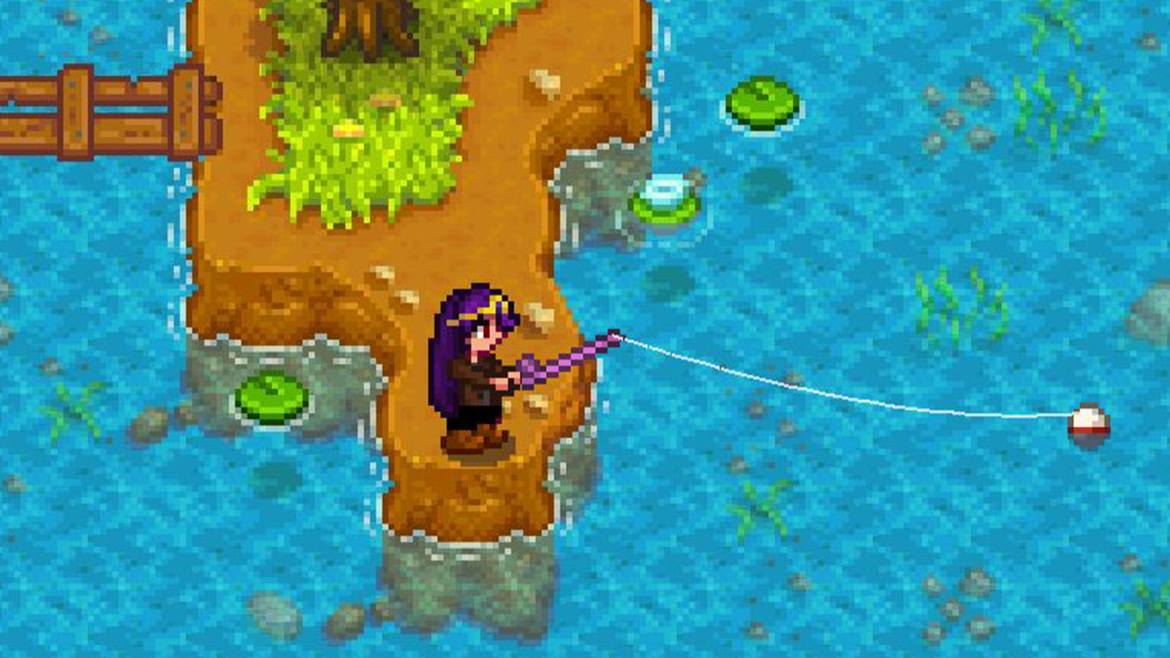
Rebekah Valentine chats with Eric Barone about ten years of Stardew (Further Reading: Alvina Lai on the museum and library in Stardew). - Not gold that glitters, or interviews with collectors from different countries. Part 5. Tunisia. | Medium
Roman Saiapan interviews developer and collector Iyed Abbes about the state and logistics of game collecting, preservation, popularity, and development in Tunisia (Further Reading: Felipe Pepe on the gentrification of games history). - Supernatural was a breakout VR fitness sensation — meet the women furious with Mark Zuckerberg for killing it | The Verge
Victoria Song talks to the women fighting to keep a VR fitness game and yet another of Meta’s callous writeoffs alive.
“Dickson is what your typical Supernatural user looks like. In an emerging tech category with expensive hardware dominated by 18-to-34-year-old men, the majority of Supernatural’s warriors are women, people over 50, and folks with limited mobility. And in the weeks since the news, they’re not staying quiet in their grief.”
Relatable tbh
I often link together pieces relating games to own material circumstances, and there’s definitely some of that in here too, but the the connection I see among these five pieces is in how we relate or do not relate to game characters and especially protagonists.
- Johnny Silverhand and the End of History | Stuckness
Ian Williams contemplates Johnny, Keanu, and the Gen X of it all (Further Reading: Sam Reader on 2077‘s alignment with older dystopian literary traditions). - I Beat OFF And All I Got Was Climate Anxiety | startmenu
Artemis Octavio ponders OFF‘s climate allegories and its separation of player agency and protagonist (Further Reading: Dari on OFF). - Angelopedia | Plant or Beast
Ashley Bardhan reflects on Saint Winifred, Nightreign‘s Undertaker, and faith amidst darkness. - Puberty is Hell: Growing up in Silent Hill f | Unwinnable
Emma Kostopolus situates the stakes for the teenage protagonist of Silent Hill f (Further Reading: Madeline Blondeau on The Medium). - Mirror Stage | Bullet Points Monthly
Yussef Cole takes the subversive occasion of Baby Steps to look at the Lacanian lie that underpins broader videogame player-protagonism.
“Every step in Baby Steps is an act of resistance, a movement away from the supposed ideal sought after in the game’s image. The image in this mirror retreats, leaving the player alone with its absence.”
Haters’ Corner
Note that I am not putting the haters in a corner here. These critics have earned their hate, through love.
- metroid prime 4 sucks | a weapon to surpass blaming yourself or god while knee-deep in the dead
Chuck Sebian-Lander did not like Metroid Prime 4 (Further Reading: Will Butler on Officer Samus Aran). - Ghost of Tsushima, Spec Ops: The Line, and False Choices | Medium
WordsMaybe finds anything critical Ghost of Tsushima has to say about principles and war crimes muddled by the game’s broader uncritical operation within the stealth action tradition (Further Reading: Gabrielle de la Puente on Ghost of Tsushima).
“Jin is always fated to be the Ghost. To save Tsushima by any means necessary, even mass poisoning, and to be ostracized by the society he covets and sacrifices so much for. That is the story of Ghost of Tsushima. Trouble is, it’s just not a very interesting one. It doesn’t strive for even heavy-handed genre subversion. It wants to play ALL of the tropes both in the mechanical genre and that of its story. It’s the fantasy of getting to be a “cool samurai and a cool ninja” in one package that plays all the stereotypical cultural hits of pre-industrial Japan from haiku, to winding trees dramatically blowing in the wind, torii gates, onsen, katana, tatami mats, honor being said every three sentences, and so on like an Around the World exhibit at Epcot.”
Weird Wending
There’s something inherently weird about puppets, right? Maybe uncanny is the better word, but Phoenix did not write an article called “Where is the Uncanny?”, so that’s where I’m at.
- Something to Touch | Unwinnable
K.M. Nelson contemplates the tactile unreality of puppetry, in Kunitsu-Gami and beyond (Further Reading: Cind on Kunitsu-Gami). - Where is the Weird? | Unwinnable
Phoenix Simms notes a growing paucity of the weird, esoteric, and experimental in an increasingly risk-averse AAA landscape (Further Reading: Bee Sprawlbug on Plato’s Caving).
“Play for me has always been fraught and Weird. Play often creates mirrored, alternate versions of worlds that exclude various aspects of my identity. Play is often paywalled, especially in AAA realms, and sometimes technically inaccessible as well. Even before we engage with play in digital worlds, we often first learn about who we are as a playful subject in games of speculation and socialization as kids. Who accepts you in a playful circle? Who doesn’t? What is considered valid play? What isn’t?”
Yes Chef
These next four picks give more primacy to the authors’ play experiences, but if you’re looking for a tigher theme we do begin and end with cooking analogies.
- Sums Of Their Parts: 868+10S | Bloomed Wings Blog
Cind compares a couple of simple and satisfying recipes for trashing enemies. - the year in clears #01: banjo-kazooie | The Backbloggery
etcetega eschews nostalgia and situates Banjo-Kazooie in relation to its genre peers (Further Reading: Carmilla Morrell on Banjo-Tooie). - ‘Lost Records: Bloom & Rage’ [Tape 1] and the Yearning For Escape | Epilogue Gaming
Flora Merigold connects with the musical core of a set from the Don’t Nod back-catalogue (Further Reading: Wallace Truesdale on Unbeatable). - Harvestella Review: Sometimes the best gourmet meals are the simplest dishes | No Escape
Kaile Hultner finds a whole meal in the RPG farming sim we mostly kind of slept on (Further Reading: Holly Nielsen on winter and death in Harvest Moon).
“Making food, like making a game, is a process that takes time and skill to perfect. Even if you use the most basic, most recognizable ingredients, getting a meal right is not guaranteed; one wrong move, a moment of lapsed attention, and everything you work for might be ruined. The ingredients in Harvestella are eminently familiar, and if they had been implemented improperly or without care, we might be talking about this game as a failed Nier clone with Rune Factory or Story of Seasons stapled to its back. Instead we get something delicious: a game that inspires players to slow down, learn about the world they’re visiting, make a tasty homegrown meal, and revel in the comforts of a compelling story well-told.”
Make and Play
If the previous section talks about play, this one moves toward articulating philosophies and values of play and making.
- Finding Home in Johto | Inner Spiral
Alli muses on loneliness, routine, and taking it slow in Pokémon gen 2 (Further Reading: Samantha Trzinski on growing up with gen 3). - Let It Go: Finishing games is optional | Kimimi The Game-Eating She-Monster
Kimimi reminds us it’s about the joy of the journey, not the accomplishment of the end credits (Further Reading: B on Backlogs). - LLM Slop Will Make Us Antisocial – Ruminations on IFComp 2025 | mimidoshima
Kastel dissects the inherent solipsism of insisting other people read and validate “your” art when you won’t yourself read anyone else’s–or even your own (Further Reading: Maddie Agne on why Gen Z is not the slop generation).
“It took me a long time to recognize how vibe coding and the culture of pro-LLM people are repudiating the very idea of community, and I find this to be the most convincing argument against them. Even if people have figured out how to make LLMs not spread misinformation, found a way to decrease energy costs, etc., I still believe these technologies as they are currently implemented should be rejected for inculcating rent-seeking mentalities.”
Critical Chaser
Learning a bit more about Italian infrastructural policy than I expected this week.
- Milano’s Odd Jobs Ranked By How Much I Want To Do Them | Gamesline
John does odd jobs to highlight the occasion of a delightful PS1 fan translation release. - Super Smash Bros. Hates Mario | Jake Should Be Writing
Jake Steinberg emphatically disagrees that Everyone Is Here. - AI PlayStation podcasts are a good thing (guest column by Definitely a Real Person) | Polygon
replace this template with your own brief, one-sentence summary of the article’s key argument - ‘I’m going to be sick’: Arc Raiders players react with an appropriate level of revulsion after discovering Embark committed the cardinal sin of placing a stop sign in a weird spot | PC Gamer
Lincoln Carpenter puts a stop to improper in-game signage.
“That’s right. As Arc Raiders takes place in Italy, this is a stop sign that’s failing to observe Articles 144, 145, and 148 of Title 2 of the Regolamento di Esecuzione e di Attuazione del Nuovo Codice della Strada, which stipulate that stop signs must be accompanied by cross-lines featuring the word STOP on the pavement, repeated across each lane of traffic subject to the stop sign, and which must be marked at least 5 meters away from a pedestrian crossing should one exist. That anyone could ignore roadway safety in Italy is a notion so offensive that it borders on the inconceivable.”
Subscribe
Critical Distance is community-supported. Our readers support us from as little as one dollar a month. Would you consider joining them?
Contribute
Have you read, seen, heard or otherwise experienced something new that made you think about games differently? Send it in!