

Welcome back readers.
As we move into the back quarter of the year, it’s time for us to start thinking about our annual Year In Videogames Blogging recap. This is always a major undertaking, and with our weekly issues breaking year-over-year records for the number of articles we’re reading, this will likely be the biggest annual issue yet! Yes, you got me, I’m still making an effort to bang the Patreon drum a little harder than usual as we work to shore up our finances. Your support helps to ensure that the labour that goes into putting the issue together is properly compensated, so if you’re not already a member, please give our membership tiers a look, won’t you?
This Week in Videogame Blogging is a roundup highlighting the most important critical writing on games from the past seven days.
Re:Views
Let’s kick things off this week with three reviews of recent titles paired with an essay reflecting on the practice of criticism.
- Roman Sands Re:Build review – a fiendish immersive sim drenched in a vaporwave glitchcore palette | Eurogamer
Alexis Ong comes away exhausted but high on the immaculate and oppressive vibes of this imsim’s ambivalent two-act structure (Further Reading: Jenna Mahale on Discopup). - Control Resonant — a balada de uma arma viva | RDD
Hiero de Lima finds new character heights, along with some of the same nagging gameplay problems, with the other Control, the other Faden (Further Reading: Alexis Ong on Control Resonant). - Kernel Hearts Review | No Small Games
Emily Merritt hits it off with a magical-girl-themed action roguelike with a more freeform approach to level and encounter design (Further Reading: Ashley Bardhan on Hell Maiden). - Let Us Eat Cream-Cheese-Cucumber-Tomato-Sandwiches, On Rye-Bread | Emily’s Substack
Emily Wilson remains steadfast in her conviction that the public has a more adventurous palate for art and criticism than take-driven discourse would readily admit (Further Reading: Jake Steinberg on aesthetic experiences and the consumer review).
“Difference of opinion can be the starting point for an interesting and enlightening conversation, and I’ve been glad to learn about many people spending many hours discussing both the film and my piece about it. But it’s reductive and implausible to think that “the public” will always be more interested in endless rehashing of reactions and yet more reactions to one film review than in any of the literary or historical topics that are the actual subjects of the book – even when “the public” have voluntarily turned up to hear about these literary and historical subjects. To me, this is related to the deeply patronizing notion that scholars and critics who care about “outreach” must be unremittingly positive about all popular culture, regardless of their actual views, for fear of offending “the public”. The public is made of sterner stuff.”
Clouds and Coral
With Ace Combat 8 out next week, let’s take the occasion to reflect on the relationship between videogames and their aesthetics, war, and violence more generally.
- Ace Combat 8: Wings of Theve Review | IGN
Will Borger unpacks the paradox of the anti-war war game (Further Reading: Cole Henry on Ace Combat 7). - Ace Combat X Skies of Deception: Plane talking | Kimimi The Game-Eating She-Monster
Kimimi highlights an underlooked portable sortie into the skies of Strangereal (Further Reading: Autumn Wright on Strangereal). - Deathmachine: Living as a Bullet | Gamesline
Lilith examines Armored Core 6‘s engagement with violence, both oppressive and revolutionary, and its rejection of moral equivalence in an unequal and unjust world (Further Reading: Kaile Hultner on being a gun that never misses).
“Armored Core 6 does not advocate an idealistic platitude that all violence is unilaterally bad. I think its story simply understands that systems which inflict violence—and this includes the bloodless political violence of authorities—are devoid of humanity. When survival is on the line, violence becomes a necessity, especially when the political position of your opponent requires your death.”
Jumpscared
Now let’s do a horror section, bringing together writing on Resident Evil, adaptation, and Silent Hill.
- Explicamos la relación de la película Resident Evil: Noche Cero con los juegos, referencias, lore, continuidad y más | GamerFocus
Julián Ramírez challenges assumptions about adaptation by considering the recent Resident Evil film’s connections to its series on the level of theme and structure rather than characters and continuity (Further Reading: Iain Mew on Platoon). - I saw Cregger’s Resident Evil | Laura Michet’s Blog
Laura Michet is picking up what Cregger is puitting down when it comes to nailing the feel of playing horror games (Further Reading: Vikki Blake on Silent Hill: Ascension). - Silent Hill: Townfall: The Kotaku Review | Kotaku
Reid McCarter identifies a partial commitment–and partial returns–in Silent Hill‘s newfound attention to concerns beyond its titular locality (Further Reading: Emma Kostopolus on Still Wakes the Deep).
“This is a game that asks how economic systems shape those who live within them on levels deeper than they might imagine. It asks how our sense of self is directed by our jobs, and how (or if) we can decouple personal and professional responsibility. It wants its player to consider individual and communal indebtedness within the framework of a cruel world. Simply asking these questions gives Townfall a vibrancy uncommon to big-budget game productions. The thin answers given to these questions, though, are a letdown in proportion to the promise given by posing them in the first place.”
Green Hills
These next three essays examine culture, class, and climate in popular games and series.
- The Cultural Void of Final Fantasy XVI’s Dhalmekia | Deleted Saves
Mazen Haggag examines how FFXVI‘s most-orientalized nation is also its least substantial, with no real cultural foundation underpinning its slapdash stylistic trappings (Further Reading: Leanne on problems of race in FFXVI). - The Blood Of Dawnwalker Wants You To Eat The Rich-Literally | GameSpot
Francisco Dominguez praises The Blood of Dawnwalker for eschewing upward mobility to keep its class consciousness firmly on main (Further Reading: Tauriq Moosa on The Blood of Dawnwalker). - Never Give Up The Fight | Stop Caring
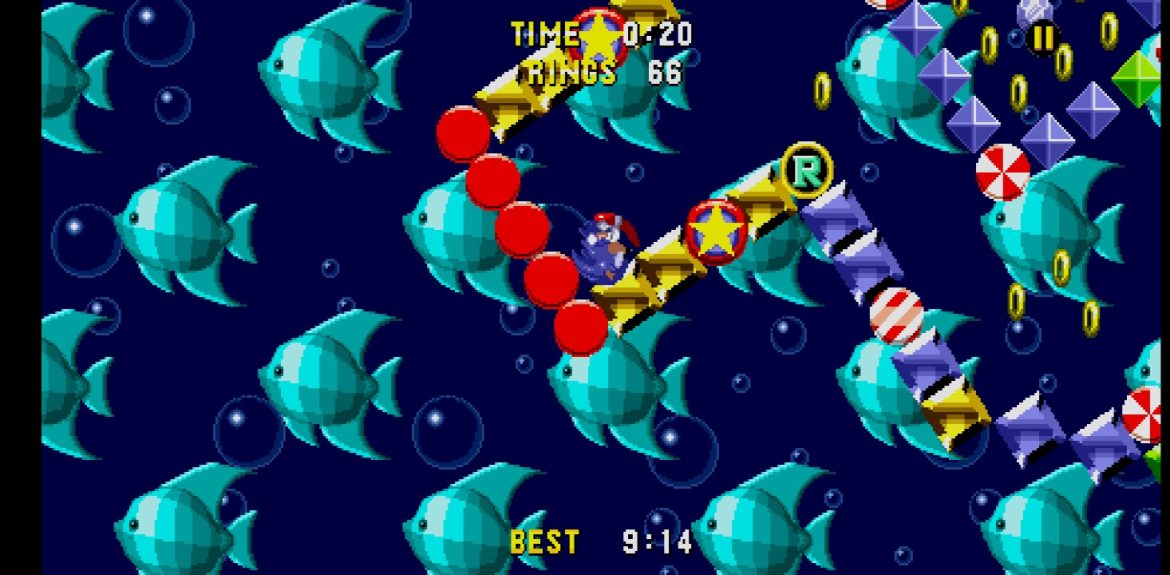
Madeline Blondeau juxtaposes the themes and aesthetics of the classic Sonic games–already a dichotomic meeting ground between natural ecosytems and ruinous tech sprawl–with contemporary Sega’s lean into LLM-addled development (Further Reading: Waverly Wilson on how Sonic lost his edge).
“Built from monocoque titanium and piloted by three on-board LIPS A.I. chips, Metal Sonic is a prescient analog for our cultural moment with AI. An imperfect, unfeeling clone built to replace a flesh and blood creature. Yet all it’s capable of is harm–it burns fuel across blown-out highways and kidnaps children like Amy Rose to (presumably) entrap them into indentured robotic servitude. Its inventor insists that it’s better, stronger, faster than the real thing, and hedges all of his bets on it. Yet it’s eventually outpaced and trounced by bipedal hedgehog know-how. Was there ever even a point to trying?”
Up and Running
Four more essays for you; these ones skew more towards the experiences of play.
- After Summer – Kingdom Hearts II Final Mix | Pixpen
Sam Howitt finds melancholy and humour in coming back to a game about moving on (Further Reading: Madeline Blondeau on Kingdom Hearts and the fear of growing up). - The Summer without Games, or, Living with Ludofatigue | Gamers with Glasses
Edmond Y. Chang ruminates on the theory, practice, and experience of gamer burnout (Further Reading: Mollie Taylor on live service burnout). - Yoshi and the Mysterious Playstyles of Children | Crossplay
Jon Irwin contemplates what kids instinctively “get”–and critics sometimes don’t–about games made for, well, kids (Further Reading: Joseph Earl Thomas on the fantasy of playing Final Fantasy). - Marathon (2026): Shells In The Wild | Hylia’s Corner
Hylia finds a Runner’s road back to first person shooters (Further Reading: Will Butler on Marathon).
“For a game so isolating in gameplay and reception alike, I’ve gotten to truly connect with friends through the medium I love in a way I was rarely comfortable with before. I grew to accept losses in a way years of playing fighting games casually (usually because I’m too busy hosting for them) couldn’t instill in me. Though my luck with troubled multiplayer titles doesn’t seem to be ending anytime soon, I’ve since returned to parries and blockstrings in no small thanks to Marathon. It opened my eyes to a genre I largely wasn’t as accepting of beforehand, let alone being an insightful, fun, and brilliantly designed experience on its own merits. Wherever Marathon ends up, cooperative or competitive, extraction or survival, thriving or departed, I’ll be there. Shells wash up on the ocean again in due time.”
Cavia Emptor
Three critical lookbacks at series and genres.
- Tokyo Nanpa Street and the Eroticism of Montage | Ogre Run
Ogre Run looks back at an early progenitor work where eroge themes, already prolific in a variety of genres, coalesce into their own bespoke context (Further Reading: Nicole Branagan on Idle Mahjong Final Romance). - Barbie Rewind Threatens To Bring Out My Inner Horse Girl | Kotaku
Rebekah Valentine takes the occasion of an uncoming compilation to reminisce about the Barbie demo discs she grew up on (Further Reading: Amelia Zollner on Barbie Horse Adventures: Riding Camp). - The Copied Cathedral: Drakengard 3
Erin D. reckons with the apothesis of Yoko Taro’s backwards-plotting formula, but the juice ain’t worth the exhaustingly juvenile squeeze (Further Reading: Alephwyr on Drakengard 3 and Xenofeminism).
“Drakengard 3 is clumsy, annoying, unfunny, misogynistic, reductive, and nakedly cynical. It builds to something heartfelt and affecting. It is sincerely challenging in a way that none of these games have ever been, and simultaneously more cloying, pandering, and commodified than any previous entry. It ends on a haunting note, but one note, no matter how effective, does not a beautiful song make. Everything else is silence.”
Critical Chaser
Something a little different to close with.
- Websites From Another World | Chisel
Florence Smith Nicholls brings the lens of ergodic literature to bear on the archipelago of art-ifacts that dot the dying/dead/reborn Internet (Further Reading: Nathalie Lawhead on the history of the Flash Internet).
“All three of these projects used the idiosyncrasies of the internet, past contemporary and future, for narrative purposes. Here we find an alternative online world, though perhaps not one that is any less dystopic. These three works are also about the gaps between what is explicitly said online, and what can be inferred through the traces that people leave through digital infrastructure.”
Subscribe
Critical Distance is community-supported. Our readers support us from as little as one dollar a month. Would you consider joining them?
Contribute
Have you read, seen, heard or otherwise experienced something new that made you think about games differently? Send it in!