

Welcome back readers.
It’s a holiday weekend here in Canada, but it would be a shame to break CD’s recent on-time-ish streak, so here I am with 17 fresh reads! I usually take a whole one week a year off from the roundup–two if I get really sick!–so if you appreciate our critical coverage and have a few bucks burning a hole in your pocket, the Patreon is always an option to consider. While you’re there, you can check out Kaile’s latest monthly recap!
This Week in Videogame Blogging is a roundup highlighting the most important critical writing on games from the past seven days.
Critical Convos
This week let’s start things off with conversations and interviews looking at creation spaces, play habits, Palestinian game devs, and more.
- A Conversation On Games Respecting Our Time | Bloomed Wings Blog
Cind and Madeline Blondeau have a back-and-forth over what we value in the time we put into games and other entertainment media. - Showing Up In The Melbourne Games Ecosystem | WellPlayed
Josefina Huq chats with devs during Melbourne International Games Week about creating communities, supporting safe ecosystems, and showing up. - “Usually, we’re not on the map.” How a new initiative is platforming Palestinian developers | GamesIndustry.biz
Ignas Vieversys reports on the recently-announced Palestinian Voices in Games initiative, talking with both organizers and participants (Further Reading: Keza MacDonald talks to Rasheed Abueideh about his game Dreams on a Pillow).
“There are a lot of people out there that are interested in [PVG], but they’re afraid to participate because of how wrongly controversial this issue is. And the more countries recognise Palestine, the more people will feel comfortable joining programs such as Palestinian Voices in Games.”
Titanomachy
Hades 2 has been out of early access for a minute, and I can kind of feel the room pulling away from Supergiant’s first sequel in a few ways. Two highlights this week.
- Hades 2’s Story Doesn’t Change The Status Quo | Aftermath
Jay Castello has little love for Hades II‘s comparatively unambitious heroine (Further Reading: Nicanor Gordon didn’t think much of Hades 1’s ending, either). - Hades II’s Ill-Defined, Unserious World Undermines the Depth and Power of Mythology | Endless Mode
Grace Benfell derides Hades II for its shallow engagement with the cosmology it pulls from.
“In every patch note released during Hades II’s early access run, Supergiant included a quotation from an ancient source of myth. This reflects the way Hades II presents itself: as a gateway to a wide world of literature, culture, and art that exist beyond it. But it represents Hades II at its worst: the mystery and grandeur of myth chopped and screwed, deemed too strange for its audience to understand more than a fragment of.”
Chat History
From mythology to history, let’s now turn to different intersections between games and different kinds of history, looking at genre, art movements, violence, and more.
- The Dark Spire: Sheer wizardry | Kimimi The Game-Eating She-Monster
Kimimi tucks into a portable Wizardry homage that truly gets it (Further Reading: Dia Lacina on the fulsome library of blobbers on the Switch). - The Utopia of Murder: History in Anthology of the Killer | KRITIQAL
WD chronicles the violence of history, with some help from Walter Benjamin, in Anthology of the Killer (Further Reading: Kevin Fox, Jr. on Anthology of the Killer). - Mending the Gardens of History | Unwinnable
Phoenix Simms unpacks South of Midnight as a work in a new eco/ethno gothic tradition.
“Hazel’s tale is one about cultivation: of care for both blood and found family across communities, time and, by extension, for the land. A land which has been ravaged both physically and spiritually by intergenerational trauma. This tale is also one that makes strange the concepts of paradise, purgatory and hell.”
Ahistorical Record
From history to ahistory, we turn now to writers thinking about distortion, obfuscation, miscommunication, misrepresentation, misremembrance.
- Stuck in the Old Ways | Bullet Points Monthly
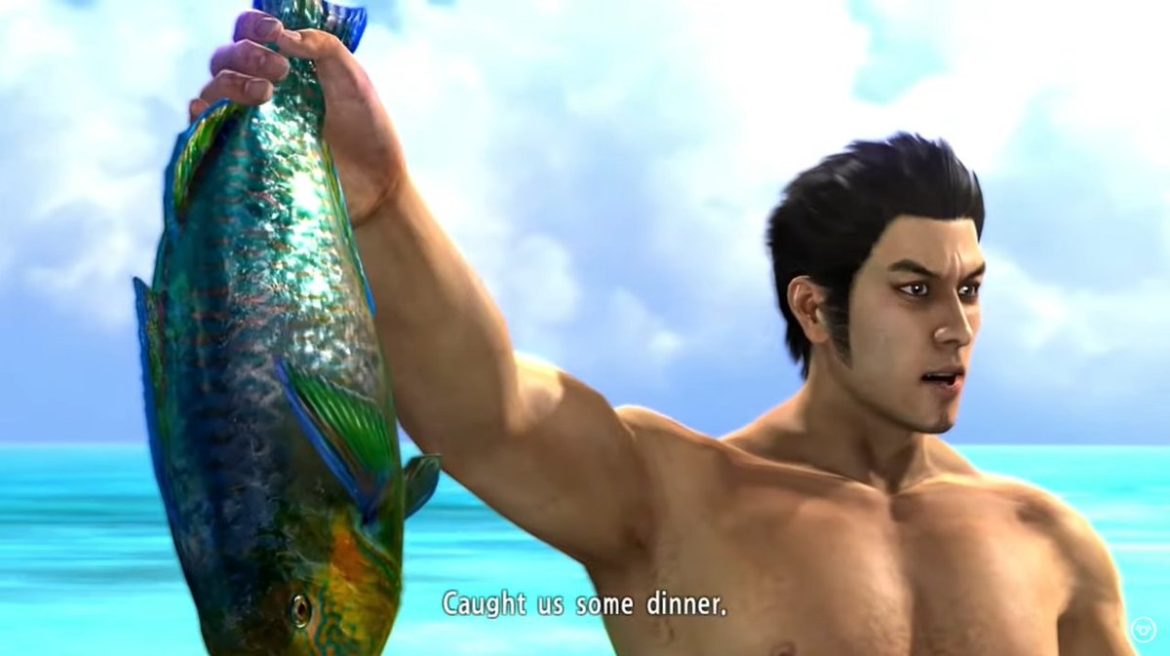
Astrid Anne Rose sees a mismatch between Mafia TOC‘s oldschool third-person staging and its storytelling goals. - Yakuza Kiwami 3 and the Case Against Game Remakes | Endless Mode
Moises Taveras wonders at the ahistoricism and insecurity that lead to a remake like Yakuza Kiwami 3 (Further Reading: Marc Normandin on the literary editions theory of remakes). - Abundance Reigns! | arcadence
Nicholas Capozzoli rejects a reductive critical impulse towards the misremembered simplicity of a good ol’ days that never were (Further Reading: Grace Benfell on the state of criticism).
“Let me say something that risks sounding like a bad faith/paranoid reading on my part, at this juncture: there is an unfortunate proximity here to “facts don’t care about your feelings” that is, if somewhat coincidental, at least a bit itchy, just as the reminder that “there are still games that want it to be 1990 again” inevitably carries with it an unpleasant echo of MAGA. There is a tremendous difference of degrees between these things, of course. But the vectors point in the same direction, an alignment of reactionary sentiment that just happens to transmit through the medium of language. There’s the shared demarcation between the cold logic of action and squishy, compromised intellectualism. The mutual foreclosure on appraisals from without, and the unsubstantiated assertion that sometimes, the old ways are best.”
Paradigm Shifts
A broader section, these four pieces offer play-based reflections on games past, present, and future.
- Celeste Was My Favorite Way To Study Spanish For A Week | Exalclaw
Wallace Truesdale climbs Canada’s most famous (?) mountain while scaling the foreboding peak of adult langauge learning. - final fantasy 13 is nowhere | a weapon to surpass blaming yourself or god while knee-deep in the dead
Chuck Sebian-Lander finds no purchase in the sprawling placelessness of Gran Pulse (Further Reading: Sam Howitt on FFXIII). - Confetti’s Cozy Corner: I want CANON asexual stories | Gayming Magazine
Milady Confetti thinks about the state (or perhaps more often lack) of ace rep in popular games. - Review | CloverPit – And You Will Know Us By the Trail of Debt | startmenu
Artemis Octavio muses on the pull of CloverPit‘s shallow charms (Further Reading: Niko Stratis on Balatro).
“When I am winning I am loving it and I’m high again, when I am losing I feel my chest sinking and I am devastated when all my progress is lost. I love this friction, too — CloverPit kept reeling me back in over and over after I vowed “never again”, but I feel as if it is a toy that grips you for a few weeks, that you eventually put down for something more engrossing and holistic.”
Critical Chaser
Mama mia.
- The Seattle Mariners’ History with Nintendo | Endless Mode
Marc Normandin details the long association between Nintendo, the Seattle region, the Mariners, and Ken Griffey Jr. (Further Reading: Drew Mackie on the history of Pauline). - Super Midlife Brothers: Thoughts on Mario at Forty | Gamers with Glasses
The folks at GwG come together to celebrate Mario being firmly over the hill.
“What I am trying to say is that I am jealous of your fame! I am envious of your athletic skills. How many sports do you excel at? How in the world do you have time to stalk Bowser and participate in the Olympics at the same time? I hate you! I love you! Every time I think about you hopping across the Mushroom Kingdom, I think about getting to ride a Yoshi. This is not fair. Why are there no Yoshis in the real world? Also, your brother–what is his name, Louis, right? – is too good for you. He is too cool to be related to you. This is why I hate you, Mario. This is why I love you because I want to know your brother.”
Subscribe
Critical Distance is community-supported. Our readers support us from as little as one dollar a month. Would you consider joining them?
Contribute
Have you read, seen, heard or otherwise experienced something new that made you think about games differently? Send it in!